A few years ago, we wrote about how anime was becoming a rising force in marketing. At the time, it felt like a trend worth watching.
Today, it’s no longer a trend. It’s a cultural engine.
Anime has moved from niche fandom into global mainstream, shaping how brands connect with audiences across generations. And if there’s one title that perfectly captures this shift, it’s One Piece.
Anime is now a global market force.
The numbers alone tell a compelling story.
The global anime market is projected to reach $66.7 billion by 2032, driven by streaming, merchandising, gaming, and international expansion. What was once considered “Japanese animation” is now a global content ecosystem.
Platforms like Netflix have accelerated this growth, investing heavily in anime and even adapting iconic series into live-action formats, bringing titles like One Piece to entirely new audiences.
This expansion matters for brands because it signals something deeper: anime is no longer a subculture, it’s a shared cultural language.
One Piece: a cultural phenomenon, not just an anime.
Launched in 1999, One Piece has become one of the longest-running and most beloved franchises in the world. The scale of One Piece is one of the clearest indicators of its cultural power and longevity. With over 1,000 episodes and still ongoing, it remains one of the longest-running and most consistently watched anime series in the world, an achievement that keeps fans engaged across decades.
Its source material, the manga created by Eiichiro Oda, has sold over 500 million copies globally, making it the best-selling manga of all time and reinforcing its massive, cross-generational appeal.
Beyond screens and pages, its impact extends into the real world: in Kumamoto, a series of life-size One Piece character statues were installed across the region, turning it into a pilgrimage site for fans. This initiative not only boosted tourism but also demonstrated how deeply the franchise resonates, transforming a local area into a global destination and proving that One Piece is not just a story, but a lasting cultural phenomenon.
What further reinforces its cultural weight is how One Piece imagery and symbolism have started to appear in unexpected, real-world contexts, from fan-led moments during football matches to its presence in protests and social movements. Characters like Luffy, who embody freedom and resistance, have been adopted as symbols that go beyond entertainment.

This kind of organic integration into public expression shows that One Piece is not just consumed, it’s lived, interpreted, and used by communities worldwide as a shared cultural language.
But its real power lies in what it represents:
– Themes of freedom, friendship, and adventure
– A deeply loyal, multi-generational fanbase
– A universe that continuously evolves without losing relevance
It resonates with:
– Millennials, who grew up with it
– Gen Z, who are discovering it through streaming and social media
– Even new audiences, via adaptations like Netflix’s live-action series
This kind of longevity is rare, and incredibly valuable for brands.
Why brands are associating themselves with anime.
Anime collaborations are no longer random. They’re strategic.
1. Emotional connection at scale.
Fans don’t just watch anime, they identify with it.
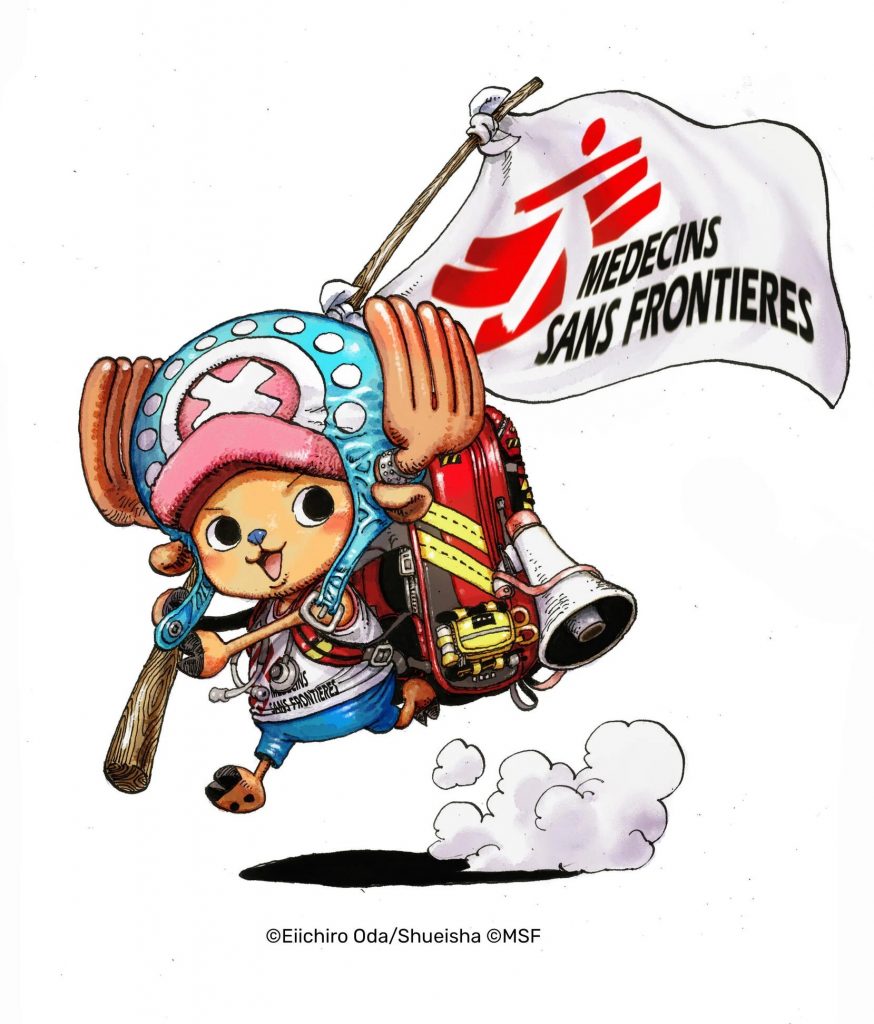
When Médecins Sans Frontières (MSF) partnered with One Piece by appointing Tony Tony Chopper as an official supporter, they tapped into empathy (Chopper is a doctor), storytelling and emotional credibility.
2. Cultural relevance and virality.
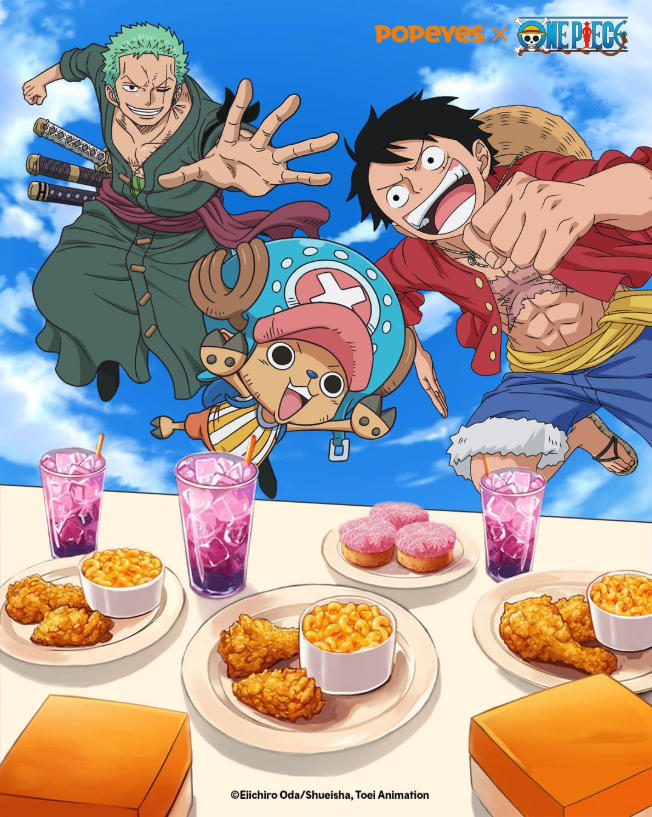
Popeyes has a new
Why? Because anime aesthetics are highly shareable, the collaboration feels fresh and unexpected and fans amplify campaigns organically. Anime isn’t just content, it’s internet-native culture.
3. Built-In communities.
Anime fandoms are among the most active and engaged communities online. By associating with a title like One Piece, brands gain immediate access to passionate audiences and, at the same time, higher engagement rates, something traditional advertising often struggles to achieve.
Collaborations like the one between Quiksilver and One Piece highlight this perfectly. By blending anime visuals with lifestyle apparel, the partnership is not focused just on selling products, it gives fans a way to express their identity in the real world. This kind of integration strengthens the bond between brand and audience, turning consumers into active participants rather than passive viewers.
What brands can learn & apply.
You don’t need a global anime collaboration to benefit from this concept. Here are a few practical takeaways:
Find cultural overlaps, not just audiences.
Don’t ask “Who are we targeting?”
Ask: “What do they care about deeply?”
Anime succeeds because it connects with identity, emotions, and shared values, not just demographics. The more your brand aligns with what truly matters to your audience, the more meaningful (and memorable) your presence becomes.
Align with meaning, not just popularity.
The collaboration between Médecins Sans Frontières and One Piece worked because it made sense on a deeper level.
It wasn’t about jumping on a trend, it was about narrative alignment. Because sometimes, relevance beats reach. A smaller but meaningful connection will always outperform a large, disconnected one.
Think in communities, not campaigns.
Anime fandoms are communities, not passive audiences. This culture teaches us that brands should participate, co-create and respect the likes of their audience. When brands behave like contributors rather than advertisers, they earn trust, and attention.
Embrace storytelling.
Anime thrives on long-form storytelling. How can brands replicate that in their marketing strategy? By building narratives, creating characters and developing “worlds” their audience can follow and feel part of.
Stay consistent with cultural signals.
If you want to tap into culture, you need to stay present in it.
This means tracking emerging trends, understanding platforms (TikTok, Reddit, Discord) and evolving with your audience. Because cultural relevance isn’t a one-time effort, it’s an ongoing commitment.
Conclusion.
You have to know your audience, what they like, what they follow, and what they enjoy in their free time, and then use these insights to your advantage. These cultural touchpoints can become your brand’s golden ticket to truly resonate with customers.
If you need help identifying your audience’s cultural preferences, get in touch with us. We can help your brand develop a long-term story that naturally fits into the narratives your customers already care about.