For the past few years, AI has mostly been a helpful assistant for us marketers.
We asked it to write headlines, generate social media captions, summarize reports, or brainstorm ideas. It saved time, sure. But at the end of the day, humans were still doing the actual work of connecting everything together.
Now, a new shift is starting to take shape.
It’s called Agentic AI, and while the name sounds a little futuristic, the idea is surprisingly simple: instead of helping with individual tasks, AI systems are beginning to manage entire workflows on their own.
And yes, this could change marketing quite dramatically over the next few years.
So, what exactly is Agentic AI?
Let’s say you want to increase your online sales by 15%. Today’s AI can help you write an email campaign.
Agentic AI could potentially:
– identify the right audience,
– create different campaign versions & personalize them individually,
– launch tests,
– monitor performance,
– pause underperforming ads,
– scale successful ones,
– and generate a report explaining what happened.
All without needing instructions at every step.
In other words, instead of telling AI what to do next, you tell it what outcome you want. The system figures out much of the rest.
Does this mean marketers will become obsolete?
Not really. In fact, most experts seem to agree on the opposite. The role of marketers isn’t disappearing. It’s evolving. The role of the CMO is expanding from steward of brand and demand to orchestrator of data, technology, and AI-enabled execution.
The repetitive parts of the job (reporting, resizing assets, creating endless content variations, moving information between platforms) will increasingly be handled by automated systems.
But the things that truly matter become even more important: strategy, positioning, storytelling, brand building, understanding people, making judgment calls.
Because AI can optimize, but it can’t decide what your brand should stand for. At least not in any meaningful way.
Marketing is becoming an always-on system.
One of the biggest changes ahead is that marketing will stop behaving like a series of isolated campaigns.
Instead of planning a campaign, launching it, waiting for results, and then adjusting, AI systems will continuously monitor performance and make small optimizations in real time.
Think of it less like driving a car and more like setting the destination while the vehicle constantly adjusts its own route.
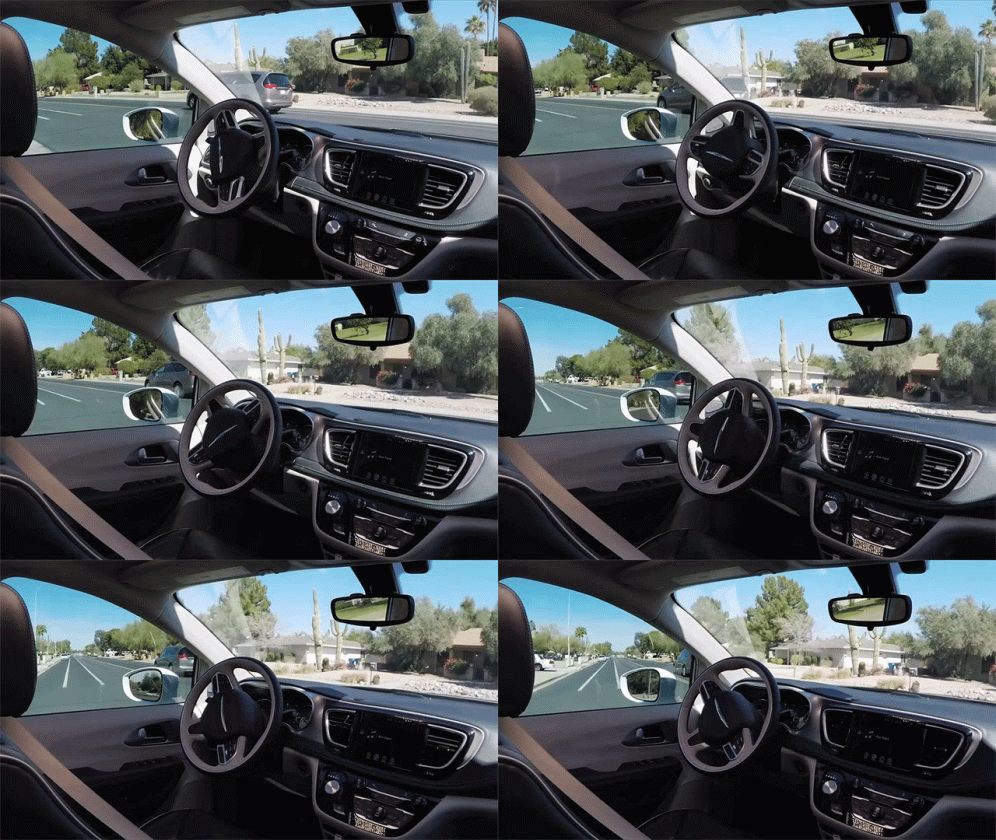
For brands, this means faster testing, more personalization, quicker reactions to customer behavior and potentially better performance with fewer manual interventions.
What does this mean for businesses?
Here’s the good news. You don’t need a massive budget or an internal AI department to benefit from these changes.
In fact, many small and medium-sized businesses are already using early forms of agentic behavior without realizing it.
Tools like email platforms, CRMs, Meta Ads, and Google Ads increasingly automate decisions around targeting, send times, creative variations, bidding strategies and campaign optimization.
Because the future isn’t necessarily about building complicated AI systems. It’s about learning how to work alongside them.
And if you run a business but aren’t sure where to start with AI implementation in your marketing strategy, partnering with an external CMO can help you identify the right opportunities, avoid costly mistakes, and build a roadmap tailored to your business goals.
The real challenge isn’t technology.
It’s trust.
As AI becomes more autonomous, brands will need to think seriously about privacy, transparency, data usage, brand safety and, the most challenging one of all, customer trust.
Just because an AI can personalize every message doesn’t mean it should.
Just because a system can optimize engagement doesn’t mean it aligns with your values.
This is where human judgment becomes essential. The brands that succeed won’t be the ones that automate everything. They’ll be the ones that automate intelligently.
Looking toward 2030.
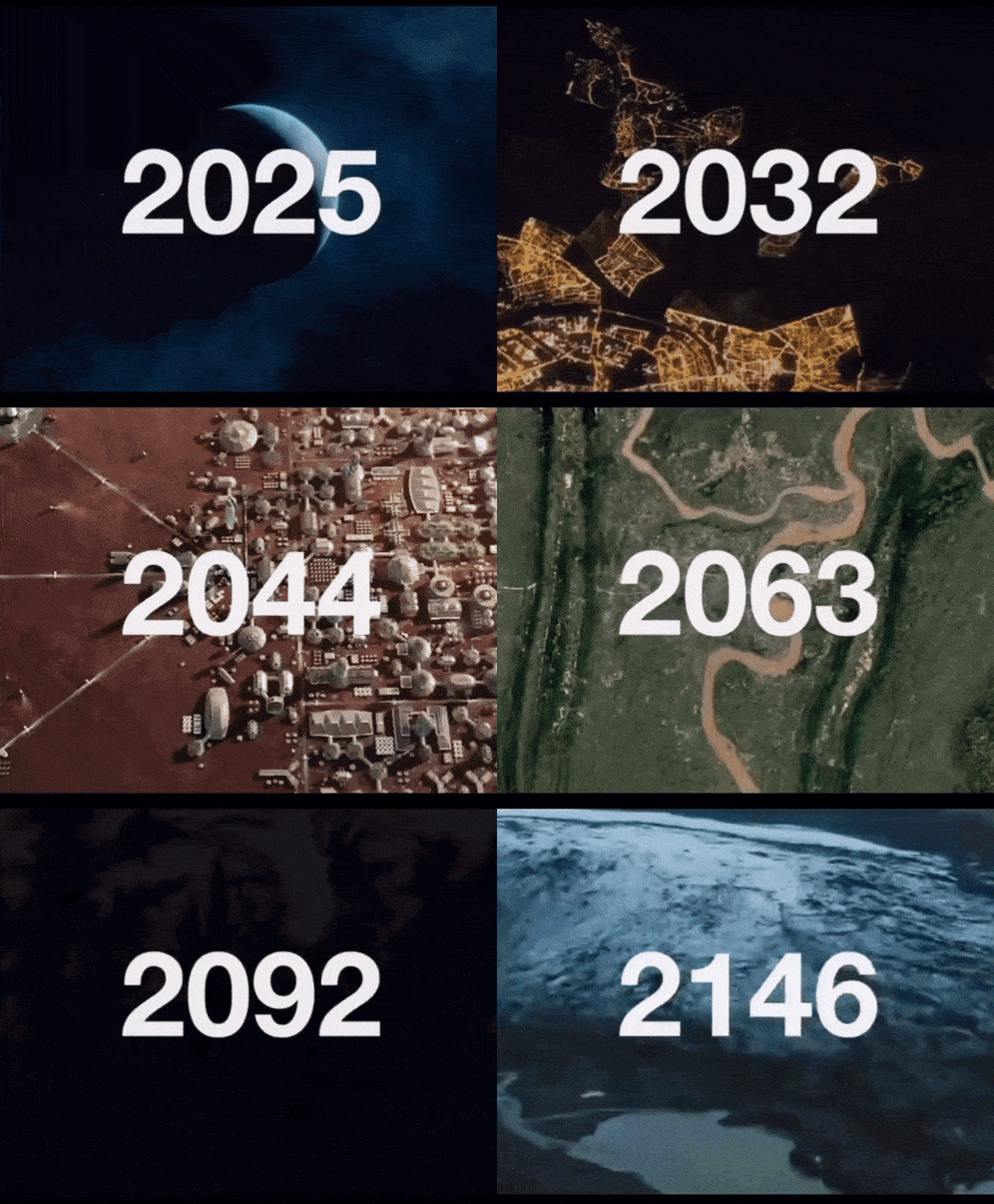
If current trends continue, marketing teams will look very different by the end of the decade. Many repetitive tasks will become largely automated, while marketers focus more on designing systems, defining goals, and shaping brand narratives.
Consumers may also begin relying more on AI assistants to discover products, compare options, and make purchasing decisions. Which means brands won’t just be marketing to people anymore, they’ll also be marketing to the systems helping people make decisions.
That sounds like science fiction. But so did asking an AI to create a campaign a few years ago.
Will we reach a marketing singularity?
There is this question circulating around the industry: are we heading toward a marketing singularity, a point where AI becomes so capable that it can run marketing entirely on its own?
The short answer is: probably not.
While AI is becoming increasingly effective at optimizing, marketing is ultimately about more than efficiency. Brands compete on meaning, trust, culture, and emotional connection. Someone still needs to decide what a brand stands for, what values it represents, and how it wants people to feel. These are not technical problems; they are human judgments.
What is much more likely is a future where most execution is automated. AI agents will handle the repetitive tasks that currently consume marketers’ time. Humans, meanwhile, will focus on defining goals, building narratives, understanding audiences, and setting the ethical and strategic guardrails that guide these systems.
So rather than a marketing singularity where humans become obsolete, we’re heading toward a marketing ecosystem where humans spend less time pushing buttons and more time steering the ship.
A practical guide for Romanian businesses: what to do (and what not to do) in the agentic AI era.
For Romanian businesses, the opportunity isn’t necessarily to become AI experts overnight. It’s to build smarter marketing systems that save time, improve decision-making, and create better customer experiences.
Do.
Build a clear AI strategy. Don’t let every team member use a different tool in a different way. Create simple internal rules for how AI is used, reviewed, and integrated into your workflows.
Invest in content quality, not just content quantity. AI can help you create more content, but the real advantage comes from producing better content, faster. Focus on useful information, strong storytelling, and clear positioning.
Strengthen your CRM and first-party data. The businesses that understand their customers best will have a significant advantage. Better lead capture, segmentation, automation, and reporting will become increasingly valuable.
Think beyond traditional SEO. As AI assistants become part of how people search and discover information, brands need content that answers questions clearly, demonstrates expertise, and builds authority.
Keep investing in your brand. Automation can improve efficiency, but it can’t replace a distinctive brand. Positioning, reputation, trust, and memorable creative assets will continue to differentiate businesses long after AI becomes commonplace.
Don’t.
Don’t use AI just to produce more mediocre content. Publishing ten average articles instead of two excellent ones isn’t a strategy.
Don’t rely entirely on platform metrics. Clicks and impressions matter, but they don’t always reflect business results. Focus on leads, sales, retention, and long-term growth.
Don’t wait for regulations to catch up. Privacy, transparency, and responsible AI use are becoming increasingly important across Europe. Build good practices now instead of reacting later.
Don’t confuse activity with progress. More dashboards, more tools, and more reports don’t automatically create growth. Strategy still matters.
Don’t assume what works in Western Europe will automatically work in Romania. Consumer behavior, purchasing power, and market maturity are different. Adapt global trends to local realities.
Where agencies fit into all this.
The role of agencies is changing too. Businesses no longer need partners who simply execute campaigns or publish content. They need partners who can help them navigate transformation.
At subsign, we believe the future agency acts as a guide between technology and people. We help businesses modernize their marketing operations, integrate new tools intelligently, improve customer journeys, strengthen their brands, and build systems that can scale alongside emerging technologies
Final thought.
The future of marketing isn’t humans versus AI.
It’s humans working with increasingly capable systems.
The brands that thrive won’t necessarily be the ones using the most AI.
They’ll be the ones that understand how to combine technology with something AI still struggles to replicate: empathy, creativity, intuition, and a genuine understanding of people.
Because even in a world full of automation, marketing remains a fundamentally human business.