It looks like today everyone is trying to speak Gen Z. And it makes sense (on the surface).
Gen Z is culturally influential. They set trends, shape conversations, and move fast. Brands want to stay relevant, so they adapt. But here’s the problem: relevance doesn’t always equal revenue.
The Gen Z obsession.
In the past few years, Gen Z has become the main character in marketing strategy.
Brands are copying meme culture, using self-aware humor, building campaigns around trends and that is perfectly ok. But in trying so hard to fit in, many brands are starting to sound the same.

Worse, they’re focusing so much on Gen Z that they’re overlooking a group with something just as important as cultural influence: spending power.
Millennials and Gen X: the overlooked powerhouse.
In 2025, Gen X and Millennials hold the greatest spending power and the numbers speak for themselves. According to an eMarketer report, the generational breakdown looks like this:
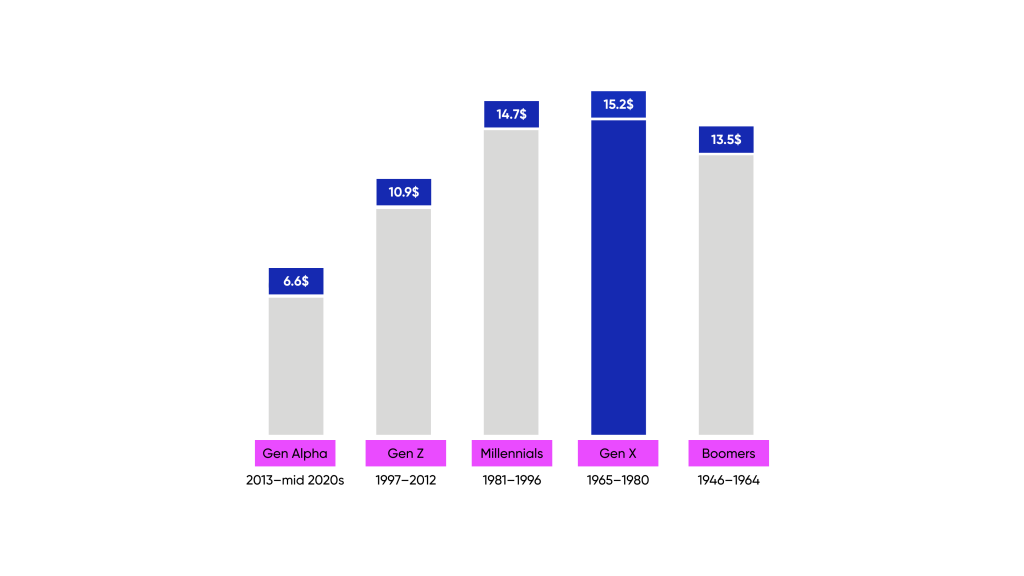
Let’s talk about millennials. They’re no longer the “young generation.” They’re in their late 20s, 30s, and early 40s. They have stable careers, higher incomes than before, families, homes, responsibilities. And most importantly: they are currently the second largest spending group globally.

And then there’s Gen X, the generation brands talk about even less. They’re in their mid-40s to late 50s, often at the peak of their earning power. Many are senior professionals, business owners, or decision-makers, with established financial stability. They’re not chasing trends or engaging in every new platform, but they are making some of the biggest purchasing decisions, whether it’s homes, travel, education, or long-term investments. In fact, in many markets, Gen X leads total annual consumer spending. Quiet, consistent, and highly valuable, this is a generation brands can’t afford to ignore.
In simple terms, Gen Z influences culture. Millennials and Gen X drive the economy.
So why are brands ignoring them?
Because the “older” generations aren’t “loud” anymore. They’re not chasing trends. They’re not trying to go viral. They’re not the center of internet culture.
But you know what they are doing? They are making purchase decisions daily, choosing brands long-term and valuing consistency over novelty.
And here’s the key difference: Gen Z experiments. Millennials & Gen X commit.
The risk of chasing Gen Z too hard.
When brands focus too heavily on Gen Z, a few things tend to happen, and not all of them are positive.
First, clarity starts to slip. In the effort to sound trendy or “in on the joke,” messaging can become confusing or overly niche, making it harder for a broader audience to understand what the brand actually stands for.
Second, brand identity begins to blur. Constantly adapting to internet humor or fleeting trends often leads to a loss of distinctiveness. Instead of standing out, brands risk sounding like everyone else.
And finally, other audiences get left behind. Not everyone connects with meme-driven communication, and that includes consumers with significantly more purchasing power. By focusing too narrowly, brands may unintentionally alienate the very people who are most likely to convert.

This isn’t about choosing sides.
This is where most brands get it wrong. It’s not about Gen Z vs. Millennials, it’s about understanding what each group wants, and why.
Gen Z is driven by authenticity, speed, and cultural relevance. They respond to brands that feel current, self-aware, and in tune with what’s happening right now. Millennials, on the other hand, prioritize value, reliability, and meaning. They’re looking for brands they can trust, products that make sense long-term, and experiences that fit into their lives.
Different expectations. Different triggers. Same brand.
What smarter brands are doing.
The brands that get it right aren’t louder, they’re more precise. They understand that relevance doesn’t mean saying the same thing to everyone in the same way.
First, they adapt their tone, not their identity. A brand can sound playful and fast on TikTok, and more structured and informative on its website, without losing consistency. The core stays the same, the expression changes.
Second, they focus on building long-term trust, not just short-term engagement. Viral moments are great, but they don’t always translate into loyalty. Strong brands invest in relationships, not just reach.
Third, they respect attention spans, and life stages. A 22-year-old and a 35-year-old don’t consume content the same way, don’t have the same priorities, and don’t respond to the same triggers. And that’s not a problem, it’s something to design for.
The real opportunity.
The real opportunity most brands are missing is this: you don’t need to chase Gen Z. You need to understand your audience mix.
Growth doesn’t come from being everywhere or speaking to everyone in the same voice. It comes from being relevant to the right people, in the right way, at the right time.
Final thought.
Gen Z is important, no question about it. But they’re not the whole picture.
And if your brand is trying too hard to impress them, you might be overlooking the people who are actually ready to buy.
Because in marketing, attention is great, but attention without conversion is just noise.